🔥 WADE WILSON SEPTEMBER 2026: INSIDE HIS PRISON LIFE AFTER TWO DEATH SENTENCES — IS LIFE ON DEATH ROW ACTUALLY WORSE THAN DEATH ITSELF?
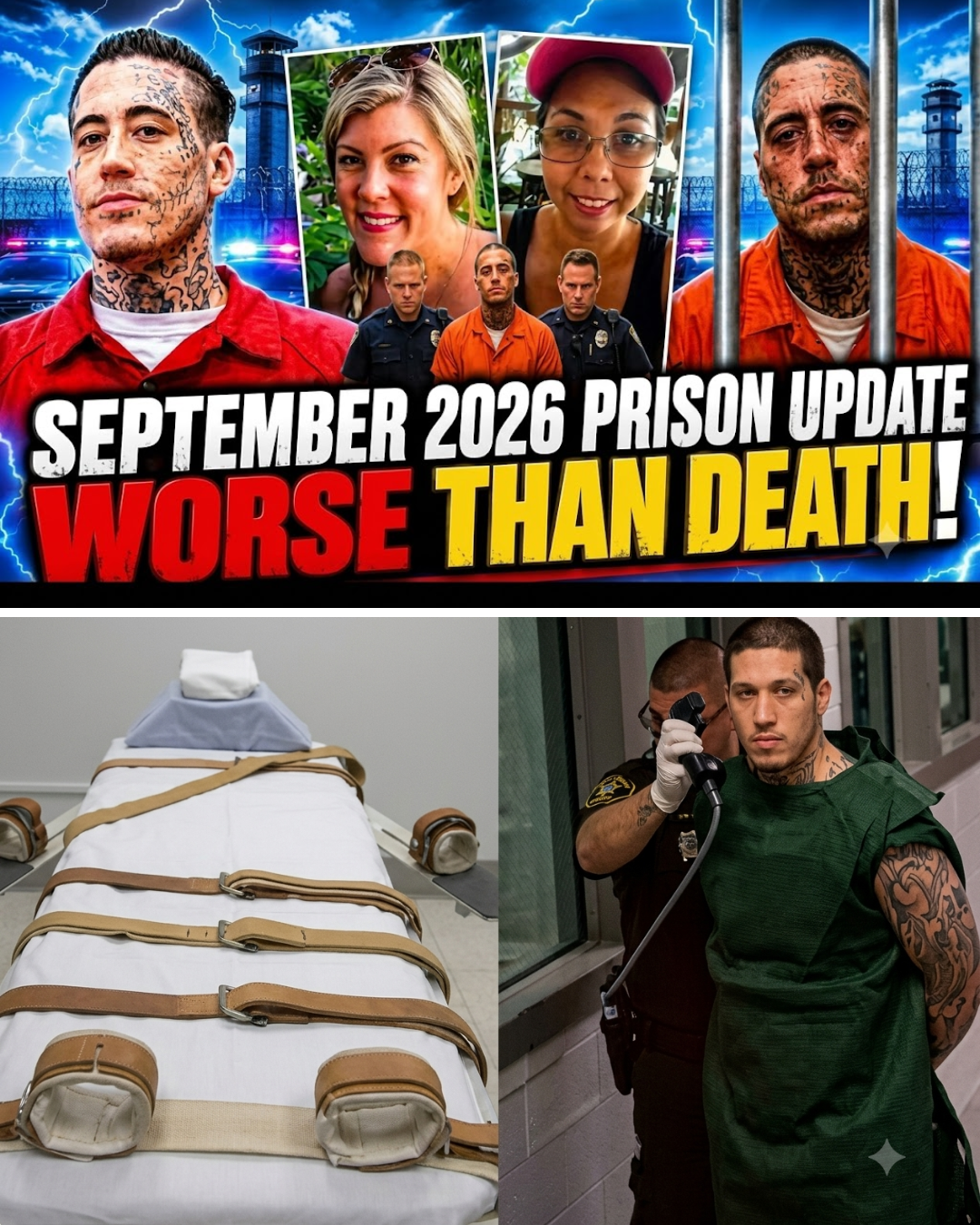
🔥 WADE WILSON SEPTEMBER 2026: INSIDE HIS PRISON LIFE AFTER TWO DEATH SENTENCES — IS LIFE ON DEATH ROW ACTUALLY WORSE THAN DEATH ITSELF?
Two death sentences.
Two lives taken.
Years behind prison walls.
And now, a question surrounding Wade Wilson is no longer only about what happened in the courtroom — but about what his life looks like after the sentence.
Since receiving two death sentences for the murders of Kristine Melton and Diane Ruiz, Wilson has remained on Florida’s death row while his legal challenges continue.
There is no ordinary prison future waiting for him.
No release date.
No return to normal life.
And no publicly announced execution date at this point.
Instead, his future remains tied to the courts.
Every appeal matters.
Every legal decision could change what happens next.
But while the courtroom battle continues, another reality exists behind the prison walls.
What does a typical day look like for a man sentenced to die?
How much freedom does he actually have?
How much contact can he have with the outside world?
And what happens psychologically when someone knows that the state has imposed the ultimate punishment — yet the legal process can continue for years?
Those questions make Wilson’s prison life very different from the image that has spread across social media.
Outside the prison, his name has attracted extraordinary attention.
Thousands of messages and letters were reportedly sent to him.
Women have publicly discussed him.
Social media users have debated his appearance, his personality and his case.
But inside death row, none of that changes the basic reality.
He remains an inmate under strict restrictions.
His movements are controlled.
His future is uncertain.
And the legal clock continues to move.
In February 2026, his attorney appeared before the Florida Supreme Court as part of the ongoing challenge to his death sentences. The legal dispute centers in part on Florida’s use of non-unanimous jury recommendations in capital sentencing.
The jury votes in Wilson’s two cases were 9–3 and 10–2.
His lawyers have argued that the sentencing system raises constitutional questions, and his attorney indicated that the issue could potentially continue to the U.S. Supreme Court.
That does not mean the nation’s highest court has agreed to hear the case.
But it means Wilson’s story is still unfolding in court.
And that creates a strange reality:
He has already been sentenced to death — but his final chapter has not yet been written.
So what is life really like for Wade Wilson in September 2026?
What happens when the headlines disappear, the cameras are gone, and the only thing left is a prison cell, l