BREAKING: Dead Humpback Whale Could EXPLODE at Any Moment!
BREAKING: Dead Humpback Whale Could EXPLODE at Any Moment!
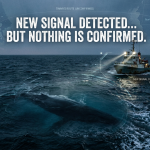
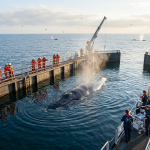
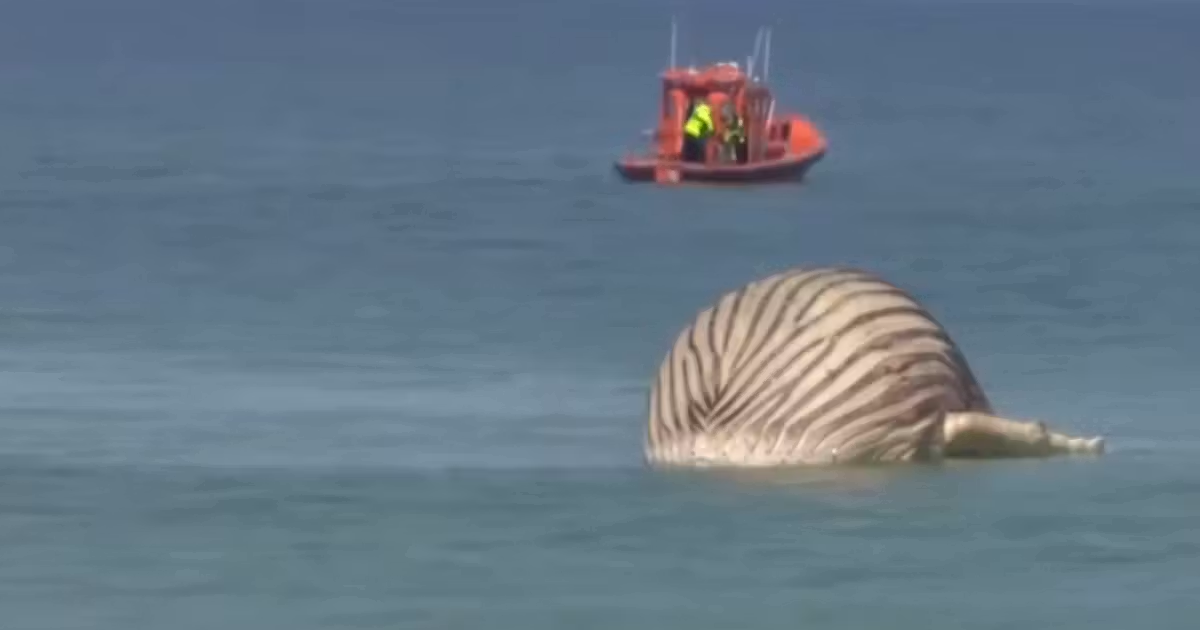
“Timmy,” a massive humpback whale, has washed ashore dead, swollen with dangerous gases that experts warn could make his body explode at any moment. Rising ocean temperatures are accelerating decomposition, producing methane and hydrogen sulfide inside the carcass — gases that are not only toxic but potentially explosive.
A previous rescue attempt has already failed, leaving authorities and marine specialists scrambling to manage a situation that is as unusual as it is dangerous. Residents and tourists are being urged to stay away from the shore, as even minor disturbances could trigger a sudden release of pressure.
Why are events like this becoming more common?
- Climate Change: Warmer seas speed up decomposition, causing gases to accumulate faster inside dead marine animals. Scientists say rising ocean temperatures are making incidents like Timmy far more likely.
- Human Impact: Overfishing, pollution, entanglement in nets, and collisions with ships increase mortality rates for whales and other large marine mammals. Many carcasses wash ashore without proper intervention, creating hazardous situations.
- Lack of Emergency Infrastructure: Coastal authorities often do not have the equipment or protocols to safely remove giant carcasses, leaving both the environment and local communities at risk.
What Timmy’s death teaches us:
This is not just a shocking headline — it’s a warning. Experts say it reflects a rapidly changing ocean ecosystem, where the combination of human activity and climate change is producing consequences that are unpredictable and sometimes dangerous.
Safety Advice for the Public:
- Do not approach decomposing whale carcasses.
- Report sightings to local authorities immediately.
- Follow official updates regarding beach closures or safety advisories.
The Bigger Picture:
Timmy’s death is more than a single incident — it’s a glimpse into a future where ocean ecosystems are under extreme stress. Scientists warn that as human impact and climate change continue to intensify, “exploding whale” events could become a recurring hazard rather than a rare freak occurrence.
This is a stark reminder: the ocean is alive, fragile, and changing — and humanity may be watching the consequences unfold too late to intervene effectively.