Haley Joel Osment Was Oscar-Nominated at 11—Then Had to Outgrow the Boy Hollywood Couldn’t Forget
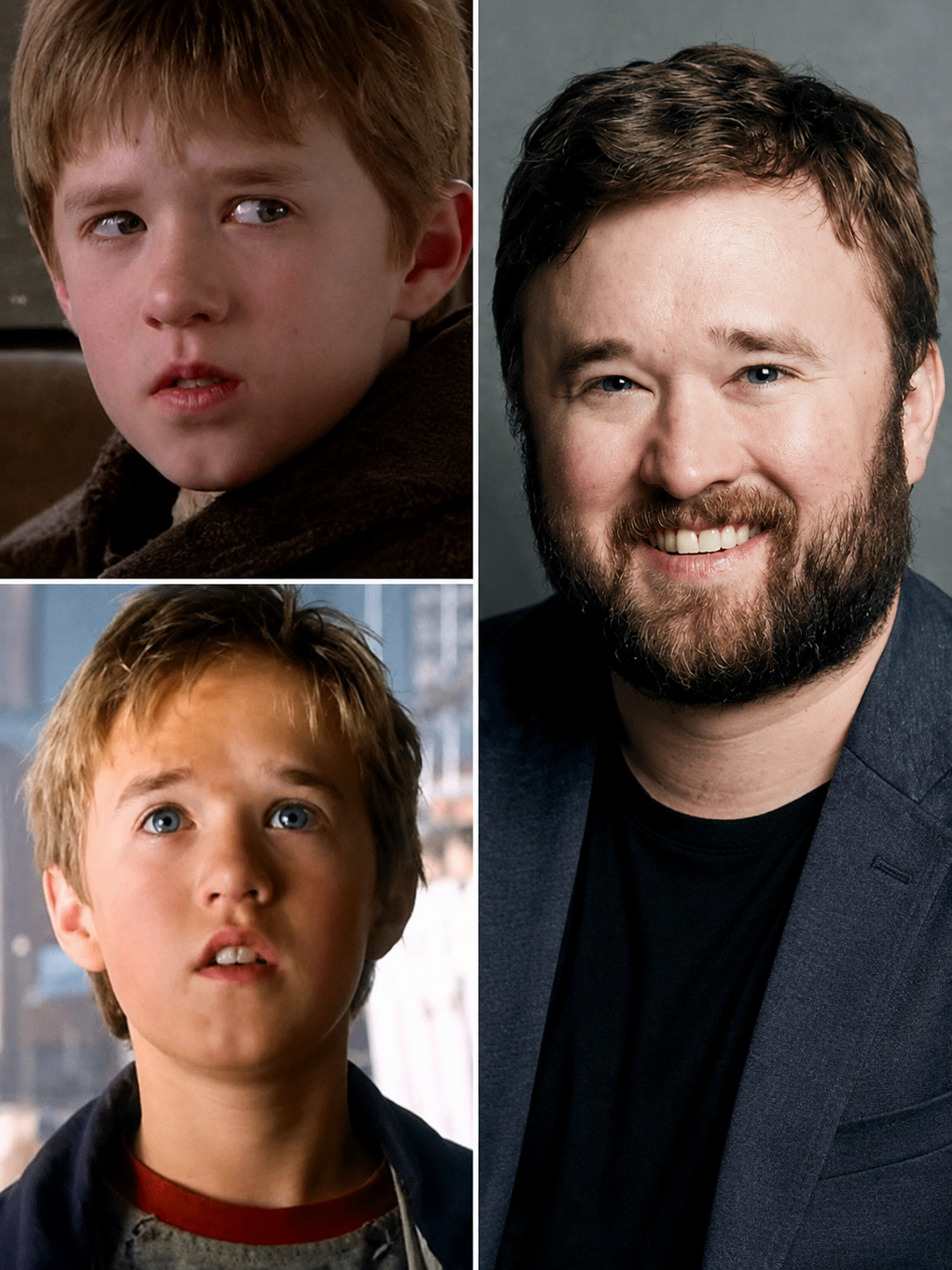
At 11 years old, Haley Joel Osment had already delivered the kind of performance many actors spend an entire career trying to achieve.
In The Sixth Sense, he played Cole Sear, a terrified Philadelphia boy carrying a secret no adult could easily understand. His whispered confession to Bruce Willis—“I see dead people”—became one of the most recognizable lines in movie history.
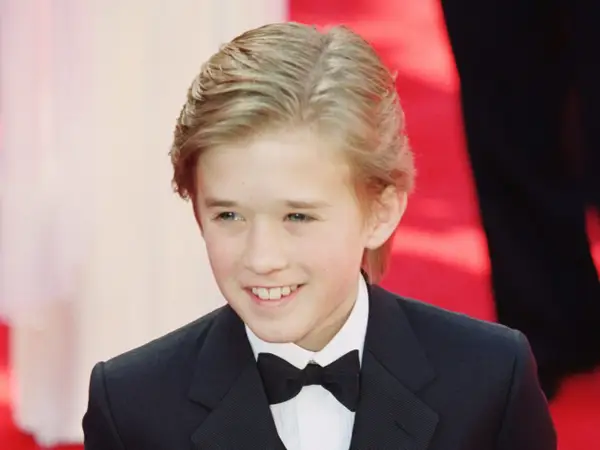
The performance earned Osment an Academy Award nomination for Best Supporting Actor. When the nominations were announced in February 2000, he was 11 years old, making him one of the youngest supporting-actor nominees the Academy had ever recognized.
Hollywood appeared to have found its next great dramatic leading man.
Over the next four years, Osment worked with Steven Spielberg, Helen Hunt, Kevin Spacey, Michael Caine and Robert Duvall. He played children facing death, abandonment, war and the desperate need to be loved.
Then he grew up.
The major studio roles became less frequent. His face changed, his voice deepened, and the qualities that had made him extraordinary as a child no longer fit Hollywood’s expectations in the same way.
Osment never stopped acting. But he had to build a new career beneath the shadow of the child who had once seemed capable of carrying any movie.
Long Before He Saw Dead People
Osment began acting at about four years old after appearing in a Pizza Hut commercial.
His first feature-film role arrived in 1994, when he played Forrest Gump Jr., the son of Tom Hanks’ title character in Forrest Gump. Although the part was small, Osment already displayed the calm concentration that would later distinguish him from many child performers.
Television work followed, including roles on The Jeff Foxworthy Show and Murphy Brown, along with guest appearances across network dramas.
By the time director M. Night Shyamalan cast him in The Sixth Sense, Osment was not an inexperienced discovery. He was a working actor who understood cameras, marks and the discipline required on a professional set.
What he did as Cole, however, went beyond technical confidence.
The character is frightened throughout much of the film, but Osment did not play fear as constant screaming. He made Cole watchful and guarded, as though every room contained something no one else could see.
Opposite Willis, he created an emotional relationship powerful enough to survive the movie’s famous final revelation. The supernatural mystery attracted audiences, but Cole’s loneliness gave the story its heart.
The film received six Academy Award nominations, including Osment’s nomination for supporting actor.
He lost to Michael Caine, who won for The Cider House Rules. Four years later, the two would appear together in Secondhand Lions.
Hollywood Gives Him the Heaviest Stories
After The Sixth Sense, filmmakers continued casting Osment in roles that demanded extraordinary emotional weight.
In Pay It Forward, released in 2000, he played Trevor McKinney, a troubled student who attempts to improve the world by encouraging people to perform acts of kindness for strangers.
The following year brought his most ambitious role.
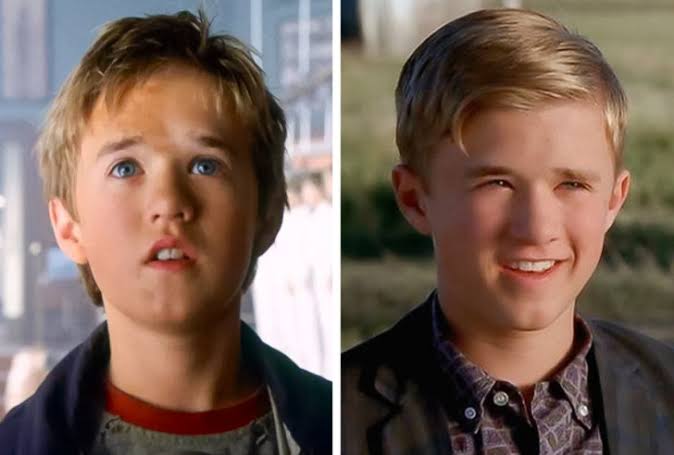
In Steven Spielberg’s A.I. Artificial Intelligence, Osment played David, a robotic child programmed to love the woman he considers his mother. When she abandons him, David begins a long search for a way to become human so that she might love him in return.
Osment was still a child, but the performance required an unsettling mixture of innocence and artificial control. David’s love is real to him, yet it has been manufactured by adults who are free to discard him.
The film placed Osment onscreen for much of its running time and asked him to carry questions about consciousness, parenthood and whether a created being can experience genuine suffering. Contemporary and later assessments repeatedly singled out the emotional precision of his work.
He followed it with Secondhand Lions in 2003, playing Walter, a neglected boy sent to live with two eccentric great-uncles portrayed by Caine and Robert Duvall.
By then, a pattern had formed.
Osment did not simply play children. He played children who had been abandoned, misunderstood or forced to confront adult failures. His characters often carried the emotional burden of the entire story.
That ability made him exceptional.
It also created an almost impossible standard for the rest of his life.
The Problem With Becoming Famous Before Growing Up
Child performers experience a transition that adult actors never face.
The audience watches their bodies change in public. A face associated with vulnerability may become harder, broader or less familiar. Casting directors who once knew exactly where to place them may no longer understand how to use them.
Osment’s childhood persona was especially difficult to escape because it was attached to one of cinema’s most famous lines.
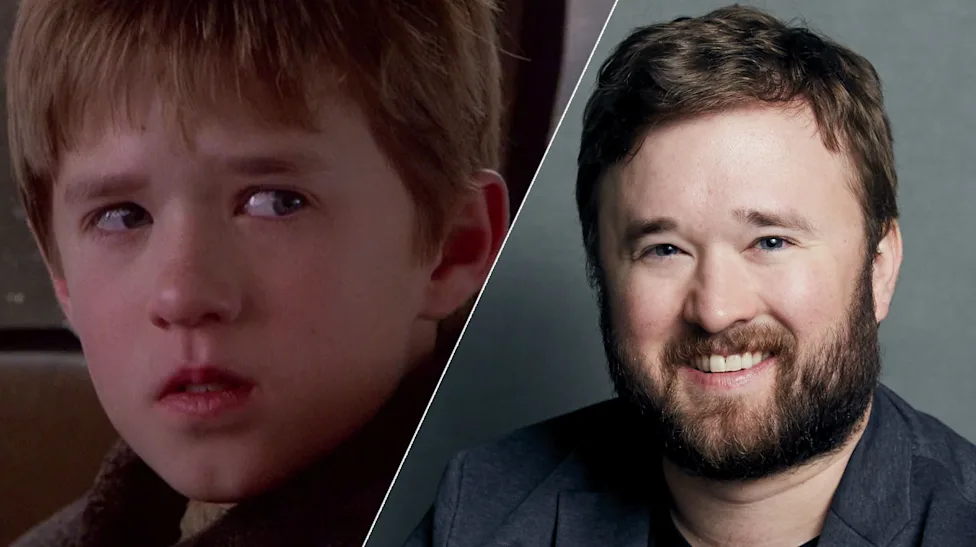
He later recalled that strangers continued recognizing him as the frightened boy from The Sixth Sense. At one stage, he grew a beard partly because it allowed him to move through public spaces with greater anonymity.
Yet Osment has resisted presenting his childhood career as a tragedy.
He has said that many young actors have positive experiences and credited his family with helping him remain grounded. Rather than chase every available role through adolescence, he stepped away from the pace of major studio filmmaking and studied at New York University’s Tisch School of the Arts.
He graduated in 2011 after concentrating on experimental theater.
That decision interrupted the straightforward Hollywood path observers had imagined for him. While other young actors were competing for franchise roles, Osment was studying and working onstage.
His Broadway debut came in a 2008 revival of David Mamet’s American Buffalo. The production closed quickly, but it represented an important shift: He was no longer being asked to preserve the image of the gifted child.
He was learning how to work as an adult actor.
A Public Setback Complicates the Transition
Osment’s move into adulthood was not without difficulty.
In 2006, he was injured after losing control of a car and later pleaded no contest to driving under the influence and misdemeanor drug possession. He received probation, a fine and requirements involving rehabilitation education and Alcoholics Anonymous.
The incident arrived during the period when his career already appeared uncertain. For audiences accustomed to seeing him as a solemn, unusually mature child, the headlines created a sharp contrast.
But it did not end his career.
After university, Osment returned through independent movies, television, theater and voice performance rather than attempting to recreate his childhood position as the center of prestige films.
That choice produced a stranger, funnier and often more interesting body of work.
Finding Freedom in Supporting Roles
As an adult, Osment became willing to look foolish, unpleasant or deeply peculiar.
He appeared in Kevin Smith’s horror comedy Tusk, the HBO continuation of Entourage and the political comedy Alpha House. He played exaggerated characters in The Spoils of Babylon and The Spoils Before Dying.
In Hulu’s Future Man, he portrayed a brilliant scientist whose identity evolves in increasingly absurd directions. He also appeared in What We Do in the Shadows, Amazon’s The Boys and the Ted Bundy drama Extremely Wicked, Shockingly Evil and Vile. More recently, he joined the ensemble of Zoë Kravitz’s 2024 film Blink Twice.
These were not the heroic adult leads once predicted after A.I.
They were supporting parts, villains, comic grotesques and men whose confidence exceeded their competence. Osment seemed increasingly interested in character work rather than defending the dignity of his former image.
Voice acting also gave him unusual continuity.
Beginning with the original Kingdom Hearts game, he became the English-language voice of Sora, a role he continued across numerous installments. The character allowed Osment to remain connected to a younger heroic identity even as his live-action work moved toward darker and more comic territory.
The contrast was striking.
In video games, millions of players still heard him as an optimistic boy traveling between Disney worlds. Onscreen, he could appear as an unstable billionaire, an awkward criminal or a ridiculous version of himself.
He Did Not Vanish—The Expectations Did
The familiar version of Osment’s story says that a child star disappeared when Hollywood stopped giving him major roles.
That description is incomplete.
Osment did lose the extraordinary position he held around the turn of the millennium. He did not become the conventional dramatic leading man many predicted after The Sixth Sense and A.I. His adult career has unfolded mostly outside the biggest studio spotlights.
But disappearance would suggest inactivity or defeat.
Osment has continued working across film, television, theater, animation and video games. He replaced the pressure to remain a prodigy with the freedom to become a character actor.
That career may appear smaller when measured against an Oscar nomination at 11. Almost any career would.
The real burden of early greatness is not simply that audiences remember it. It is that every later accomplishment is compared with something achieved before adulthood.
A supporting performance becomes evidence of decline. A comic role seems less important than a childhood drama. A sustainable working life can look like failure because the beginning was so spectacular.
Osment cannot compete fairly with Cole Sear. Cole will never age, make a mistake or accept a minor part. He will remain in the same dark room, whispering the same confession with the same frightened face.
The adult actor has had to do something more difficult.
He has had to change while millions of people expected him to remain 11 forever.