IRELAND’S JOYRIDING CRISIS EXPOSED AS TIKTOK REVEALS 1,600 DANGEROUS DRIVING VIDEOS AFTER DEADLY M9 CR@SH
IRELAND’S JOYRIDING CRISIS EXPOSED AS TIKTOK REVEALS 1,600 DANGEROUS DRIVING VIDEOS AFTER DEADLY M9 CRASH
More than 1,600 pieces of Ireland-related social media content involving vehicle theft, highly risky driving and related behaviour have been identified since the country’s deadly M9 motorway crash, TikTok officials have revealed.
The disclosure came as representatives from TikTok, Meta and Google appeared before an Oireachtas committee in Dublin to answer questions about dangerous and illegal content circulating on social media.
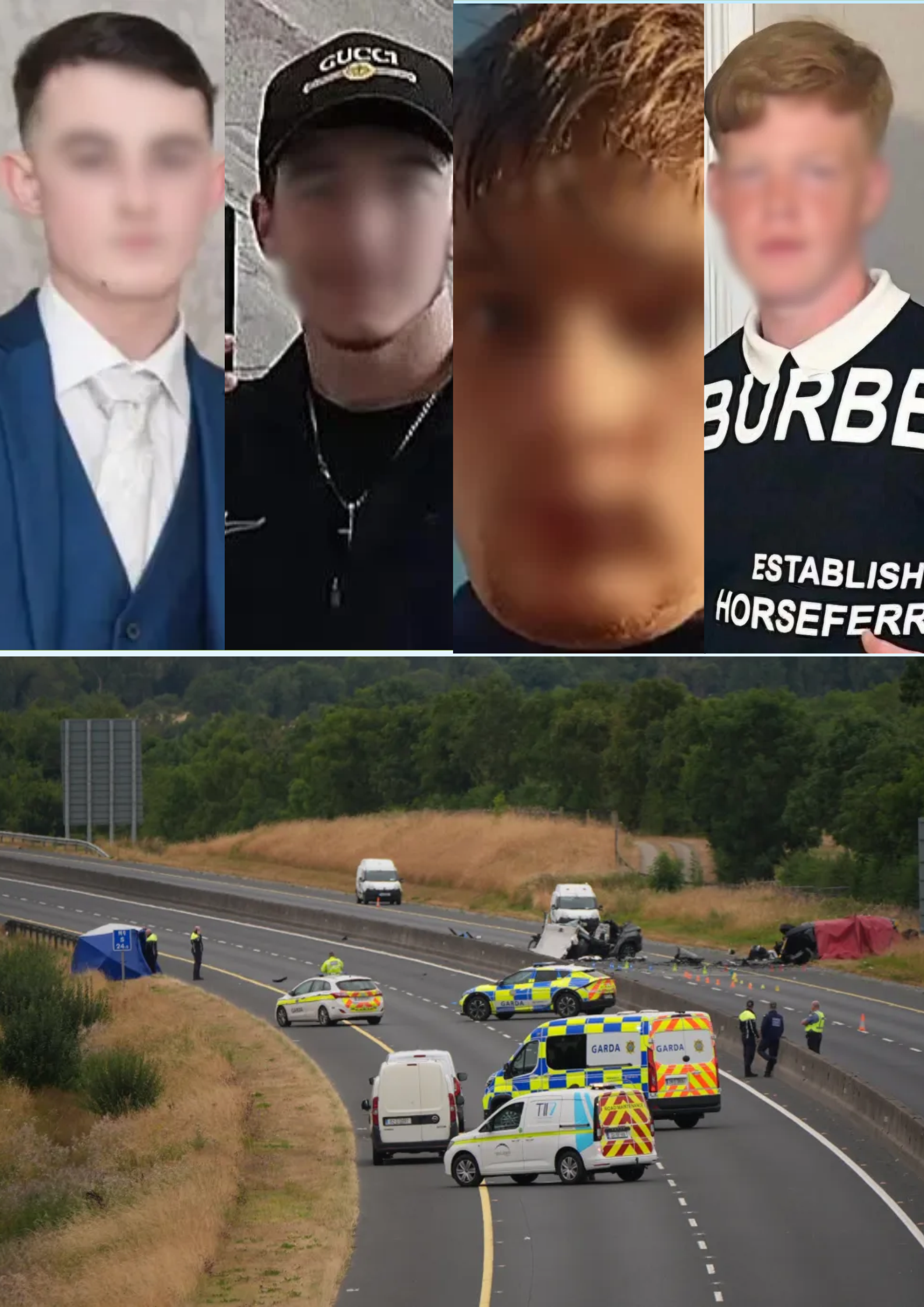
The hearing followed the devastating M9 crash in County Kildare last month, in which five teenagers died after a BMW travelled the wrong way along the motorway and collided with another vehicle.
The tragedy has intensified scrutiny of so-called “joyriding” videos and the role social media may play in encouraging dangerous driving.
 1,600 PIECES OF CONTENT IDENTIFIED
TikTok global head of policy for trust and safety Zachary Hecht told the committee that the company had carried out additional sweeps and analysis after the fatal M9 collision.
Those efforts identified around 1,600 instances of content in Ireland relating to a broader category that included vehicle theft, highly risky driving and related behaviour.
However, TikTok could not provide a specific number for dangerous-driving videos alone.
The company also could not tell politicians how many views the videos received before they were removed.
Hecht said TikTok had identified around 42,000 pieces of content involving dangerous activities or challenges globally during the first half of 2026.
He said content similar to that associated with the M9 tragedy “has no place on TikTok” and stressed that the platform was continuing to improve its moderation systems.
 THE DEADLY M9 CRASH
The scrutiny follows the August 16 crash on the M9 in County Kildare.
Five teenagers — Joey Carthy, 15, Alex McCarthy, 17, Jack Kennedy, 17, Kamil Pustkowski, 17, and Jeremy O’Brien, 18 — died when the BMW they were travelling in was involved in a collision while travelling the wrong way on the motorway.
Four members of another family were seriously injured.
The victims were travelling in a car heading towards Dublin Airport when it was struck.
The incident sparked a national debate over dangerous driving, youth crime, policing and the influence of social media.
Earlier reports found that some of the teenagers had previously appeared in videos involving stolen vehicles, police pursuits and reckless driving.
SOCIAL MEDIA ACCOUNTS UNDER SCRUTINY
The controversy has focused heavily on videos showing young people driving stolen cars, attempting to evade Gardaí and performing dangerous manoeuvres.
Some accounts reportedly attracted thousands of views, likes and shares before being removed.
The Journal previously reported on one account that had posted footage from inside a stolen vehicle travelling the wrong way on the M50. That account reportedly accumulated thousands of interactions before being banned.
The Irish Times also reported that Gardaí had previously been monitoring some of the teenagers involved in the M9 crash and that at least one had been the subject of a data order involving TikTok accounts.
META AND TIKTOK DEFEND THEIR MODERATION SYSTEMS
TikTok told the committee that it removes content that promotes criminal activity or dangerous behaviour that could cause significant physical harm.
The company said it uses both automated technology and human moderators.
Meta also told the committee about its enforcement policies concerning dangerous driving and other high-risk viral challenges.
For content involving wrong-way driving specifically, Meta said it had removed two Ireland-originated items between December 1 and September 5, while eight others had been age-restricted.
It also said 127 Ireland-originated pieces of related “viral challenge” content involving wrong-way driving had been removed.
POLITICIANS DEMAND ANSWERS
The figures prompted sharp questioning from members of the Oireachtas committee.
Committee chairman Alan Kelly questioned how social media companies could determine whether harmful content was actually reaching large audiences before being removed.
He also criticised the platforms’ approach to online safety.
Social Democrats TD Sinead Gibney said she was frustrated that social media companies continued to appear before parliamentary committees after serious incidents, arguing that more needed to change.
Meanwhile, Ireland’s media regulator, Coimisiún na Meán, has been examining how platforms respond to dangerous-driving material.
The regulator had previously asked TikTok for information about its monitoring, moderation and handling of potentially criminal content following the M9 crash.
A NATIONAL WARNING ABOUT DANGEROUS DRIVING
The debate is no longer limited to social media.
Road haulage representatives have warned that wrong-way driving on Irish motorways is becoming a serious concern for professional drivers.
Ger Hyland, president of the Irish Road Haulage Association, said drivers were increasingly encountering dangerous manoeuvres and vehicles travelling in the wrong direction.
He warned that motorists travelling legally have very little time to react when a vehicle suddenly approaches them from the opposite direction on a motorway.
For many in Ireland, the M9 tragedy has therefore become a wider warning about the consequences of turning dangerous driving into online entertainment.
And the latest TikTok figures suggest the problem extends far beyond a single viral video or a single incident.
More than 1,600 Ireland-related pieces of content have now been identified in the broader category of vehicle theft and highly risky driving since the deadly crash — putting renewed pressure on social media companies, lawmakers and law enforcement to address how such material spreads online.