TWO LETHAL DOSES — AND SHE SURVIVED: CHRISTA PIKE WAKES AFTER FAILED EXECUTION AS QUESTIONS MOUNT
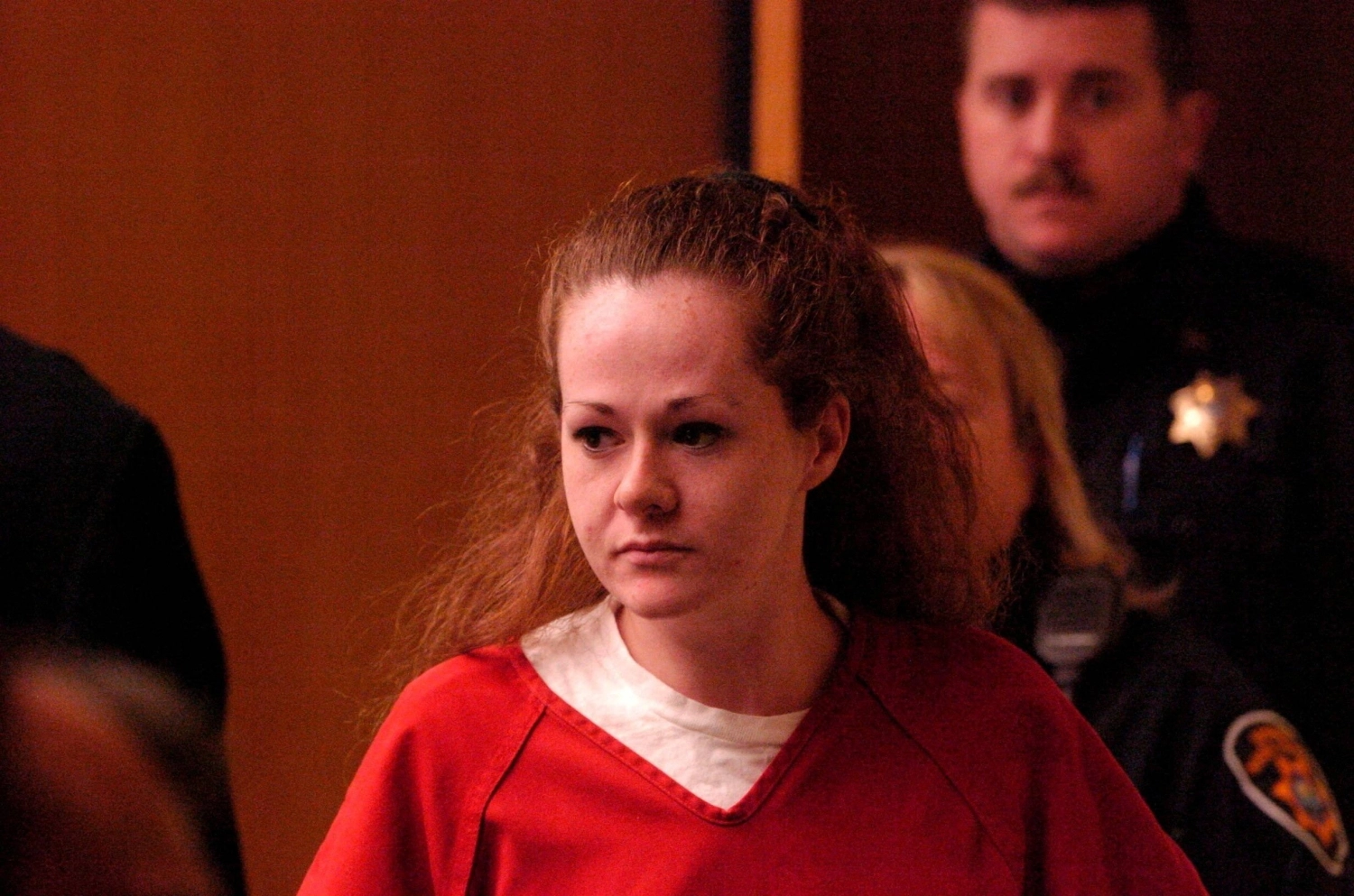
TWO LETHAL DOSES — AND SHE SURVIVED: CHRISTA PIKE WAKES AFTER FAILED EXECUTION AS QUESTIONS MOUNT
Christa Pike was scheduled to become the first woman executed in Tennessee in more than two centuries. Instead, she survived two doses of pentobarbital, suffered severe injuries to her arms and spent days unconscious in hospital. Now awake and speaking, the 50-year-old remains seriously unwell as a legal battle unfolds over what happened inside the execution chamber.
A scheduled execution in Tennessee has triggered an extraordinary legal and medical controversy after death-row prisoner Christa Pike survived an attempt to end her life by lethal injection.
On September 30, 2026, officials administered two doses of pentobarbital, the drug Tennessee uses for lethal injections. But witnesses reported that Pike continued breathing and making snoring sounds during the procedure, even after the curtain was closed.
The process continued for more than an hour before the execution attempt was halted and Pike was taken to hospital for emergency treatment.
Her attorneys later reported that she had arrived with both arms swollen, burned and blistered. Initially unconscious and placed on a ventilator, Pike unexpectedly regained consciousness and began speaking several days later.
As of October 9, questions remain about why the procedure failed, whether the state’s execution protocol was followed and what long-term effects Pike may face. Tennessee has ordered an independent review, while a judge has directed officials to preserve evidence from the incident.
 What happened behind the closed curtain?
Pike’s execution was scheduled to take place at Riverbend Maximum Security Institution in Nashville.
According to witness accounts and court filings by her legal team, the execution did not proceed as expected. Witnesses reported that Pike continued to breathe after the lethal-injection drugs were administered. Some also heard sounds described as snoring.
Her attorney, Randy Spivey, said he observed repeated attempts to establish intravenous access. He reported counting at least seven needle attempts in Pike’s left arm alone and described one needle as appearing bent when it was withdrawn.
The accounts raised questions about whether execution personnel were able to establish a functioning IV line before administering the drug.
Pike’s lawyers alleged that the execution team failed to follow proper procedures and did not adequately respond to complications during the attempt.
The state, however, maintained that it had followed its established execution protocol. The precise sequence of events and the reasons the procedure failed remain subjects of scrutiny.
 Her injuries raised further questions
The concerns did not end when the execution was stopped.
In court filings, Pike’s attorneys said she arrived at hospital with both arms swollen, burned and blistered. They alleged that problems with the IV lines may have allowed pentobarbital to leak into surrounding tissue instead of entering her bloodstream as intended.
Pentobarbital is a powerful barbiturate used in Tennessee’s lethal-injection protocol. However, no official investigation has yet established precisely how the drug was administered during Pike’s execution attempt or why the intended outcome did not occur.
Medical experts commenting on the case have discussed the possibility that failed IV access affected how the drug entered her body. One toxicologist cited by The Sun suggested that drug accumulating in tissue could have altered its absorption.
That remains a possible explanation, not a confirmed finding about what happened to Pike.
Determining whether the IV lines were properly placed, how much medication entered her bloodstream and what caused her injuries will require evidence from the procedure and medical assessments.
From unconsciousness to speaking again
In the days after the failed execution, Pike’s condition was critical.
Her attorneys initially reported that she was unconscious and receiving breathing support. They were later told that doctors believed she had suffered catastrophic neurological damage.
On October 6, however, her legal team announced that she had regained consciousness and was speaking.
Her attorney subsequently described her as confused and distressed. Her first words after waking were reported by her lawyer as: “Where am I and who are you?”
The recovery has offered a measure of hope, but it has not meant that Pike is out of danger.
By October 8, her attorneys reported that she was suffering from pneumonia and a blood clot and had experienced difficulty swallowing and moving her arms and hands. They also said she had begun taking limited steps with assistance and eating.
Her long-term prognosis remains uncertain, and her legal team has warned that the injuries could have lasting consequences.
Who is Christa Pike?
Pike was convicted in connection with the 1995 killing of Colleen Slemmer, a 19-year-old classmate at a job-training programme in Tennessee.
Prosecutors said Slemmer was tortured and killed in a wooded area near Knoxville. Pike was 18 at the time of the crime and was subsequently sentenced to death.
Her case has drawn attention for decades because of the brutality described at trial, her age at the time of the offence and questions raised by her legal team about her background and mental health.
Before the September 30 execution date, appeals seeking to stop the procedure were unsuccessful.
Had the execution gone ahead as planned, Pike would have become the first woman executed by Tennessee in more than 200 years. Instead, the failed procedure has placed the state’s lethal-injection practices under renewed scrutiny.
Tennessee pauses executions as a judge orders evidence preserved
The case has now moved beyond the hospital and into a wider legal and administrative review.
On October 7, a Tennessee judge ordered officials to preserve evidence related to the execution attempt. The order covers materials including the drugs, syringes, IV lines and other equipment used, along with photographs, recordings, witness accounts and relevant documentation.
Preserving the evidence is significant because investigators and lawyers may need to reconstruct the procedure and determine whether any failures occurred.
Governor Bill Lee has also halted executions in Tennessee for the remainder of 2026 while an independent review is conducted. The state’s prison leadership has faced scrutiny following the incident, and the head of the Department of Correction has resigned, according to reports.
Pike’s attorneys are seeking to prevent another execution attempt and have renewed their request for her sentence to be commuted to life without parole. No decision to commute her sentence has been announced. <Cite refs={[“turn495305search6″,”turn495305news12″,”turn495305news20”]}/>
So why did two doses fail?
That is the central question — and one that remains unanswered.
The fact that two doses of pentobarbital were administered does not, by itself, establish how much of the drug reached Pike’s bloodstream or whether it was delivered as intended.
Her lawyers argue that difficulties with the IV lines may have prevented proper administration and contributed to the severe injuries to her arms. Medical commentators have discussed similar possibilities, but the available evidence has not yet established a definitive cause.
The state’s assertion that its protocol was followed also does not settle the question of what occurred at each stage of the procedure. That is why the preservation of physical evidence and the independent review are important.
Until investigators examine the equipment, records and medical evidence, any single explanation would be premature.
For now, Pike remains hospitalised, her recovery is ongoing, and her future sentence remains a legal question.
An execution that was meant to end in minutes instead left a death-row prisoner alive, severely injured and facing an uncertain recovery. The unanswered questions now extend far beyond Christa Pike herself: they concern how the procedure was carried out, whether safeguards failed and what the investigation will ultimately reveal.