HER MARRIAGE COLLAPSED BEFORE HER LIFE DID — NOW PAMELA CISNEROS’ PAST IS UNDER A MICROSCOPE
HER MARRIAGE COLLAPSED BEFORE HER LIFE DID — NOW PAMELA CISNEROS’ PAST IS UNDER A MICROSCOPE
BEFORE THE TIMES SQUARE TRAGEDY, PAMELA CISNEROS HAD ALREADY BEEN THROUGH DIVORCE, A CUSTODY BATTLE, CAREER SETBACKS AND YEARS OF MENTAL-HEALTH STRUGGLES — AND HER FAMILY SAYS THEY WERE STILL TRYING TO HELP HER
 Long before Pamela Cisneros became the woman at the center of a fatal Times Square case, her family says her life had already begun to unravel.
There was a marriage that ended.
A difficult custody dispute.
The loss of a job.
Years of mental-health problems.
And, according to her father, a treatment routine that had once helped keep her stable but gradually became harder to maintain.
Then came August 31, 2026.
In the middle of one of New York City’s busiest tourist destinations, Cisneros allegedly attacked two strangers with knives.
One of them was Erin Piacenti, 32, a Bank of America vice president who had returned to work that very day after maternity leave.
Piacenti died from her injuries.
Another victim, a 68-year-old man, survived.
Minutes later, police confronted Cisneros. Officers said she refused repeated commands to drop the knives and moved toward them. Two officers opened fire, and Cisneros was later pronounced dead. The New York Attorney General’s Office is investigating the police shooting, with officials stressing that the preliminary account could change.
Now, investigators and the public are looking backward.
Not simply at what happened in Times Square — but at the years that came before it.
 A LIFE THAT HAD ALREADY BEEN COMPLICATED
Cisneros, 49, lived in Queens and had no known prior arrest history, according to police.
But authorities said she had a documented history of mental-health problems.
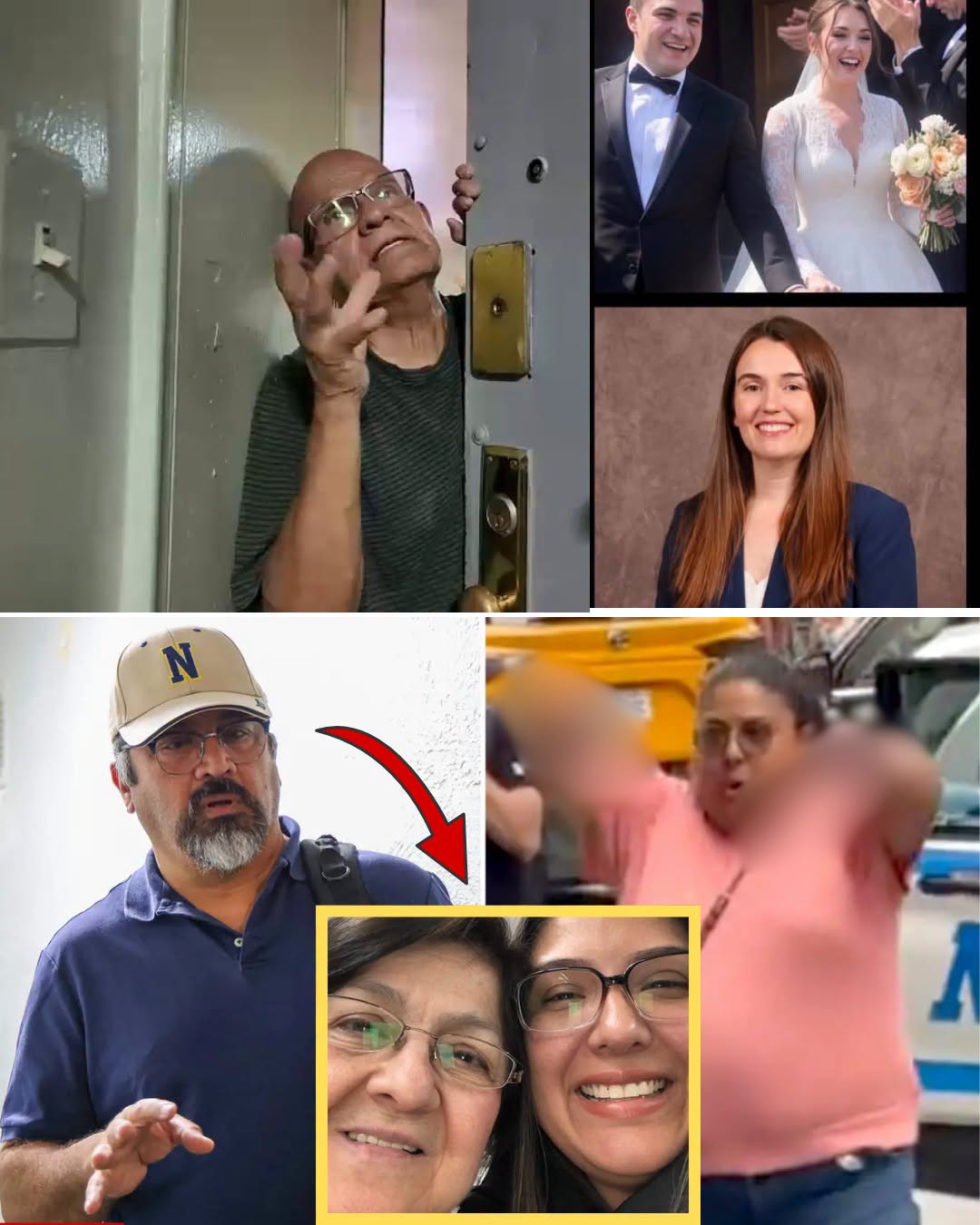
Her father, Mario Cisneros, told reporters that his daughter had struggled for years and had experienced a serious crisis in 2019.
According to her father, the family had tried to stay involved in her care.
For a period of time, he accompanied her to monthly appointments at a hospital, where she received psychiatric injections.
Her family believed the treatment was helping.
But by 2026, that routine had changed.
“DON’T WORRY, DAD. I’M GOOD.”
One conversation has become particularly painful in hindsight.
Mario told The New York Times that in April, he offered to drive his daughter to an appointment at Jamaica Hospital Medical Center.
She declined.
According to her father, Cisneros told him:
“No, Dad, don’t worry. I’m good. Don’t worry about me.”
Her father also said she had become reluctant to continue relying on medication.
That does not establish what caused the Times Square incident.
But it has become one of the most closely examined details of her final months because it suggests that the treatment routine her family had relied upon was no longer continuing in the same way.
DIVORCE AND A CUSTODY BATTLE
Cisneros’ problems were not limited to her health.
Reports about her background indicate that her marriage ended in divorce and that she subsequently became involved in a difficult custody dispute.
The breakup also appears to have been part of a broader period of instability.
Her family said she was trying to rebuild her life while dealing with personal and financial difficulties.
At some point, she also lost her job at Aflac.
Despite having a master’s degree in psychology, she reportedly struggled to find work that matched her professional background.
That contrast — an educated professional attempting to rebuild her life while facing mounting personal difficulties — is now attracting renewed attention.
SHE HAD STUDIED PSYCHOLOGY
Perhaps one of the most striking details about Cisneros’ background is her academic history.
Reports say she had earned a master’s degree in psychology.
In other words, she had studied a field closely connected to human behavior and mental health.
Yet her own family said she had been battling serious mental-health difficulties for years.
That irony has become one of the most widely discussed aspects of her story, although a person’s education or professional background cannot explain or predict a later act of violence.
THE 2019 CRISIS
According to her father, 2019 marked another major turning point.
Cisneros experienced a serious mental-health crisis and, according to the family account, attempted to take her own life.
Her father subsequently became heavily involved in helping her receive treatment.
The family believed she had improved.
For several years, there appeared to be a fragile balance.
Treatment.
Family support.
Medical appointments.
A life that was, at least from the outside, moving forward.
Then that balance began to change.
THE WOMAN NEIGHBORS KNEW
The details emerging about Cisneros’ private life have also complicated the picture of the woman seen in Times Square.
Neighbors reportedly described her as someone who could appear ordinary and unremarkable.
There was no known history of arrests that would have publicly marked her as a dangerous person.
That makes the events of August 31 even more difficult for those who knew her.
Her father said he could not understand what happened.
He had spent years trying to help his daughter.
And then, suddenly, her name was being reported around the world.
THEN CAME TIMES SQUARE
On August 31, police say Cisneros approached two people in Times Square.
The first victim, a 68-year-old man, was injured.
Shortly afterward, Piacenti was allegedly attacked.
Piacenti was just 32.
She had a five-month-old daughter, Madison, and had returned to work at Bank of America that same day after maternity leave.
Her colleagues had welcomed her back with flowers and signs at her desk.
By the afternoon, she was critically injured.
She later died.
Piacenti’s death has prompted an extraordinary outpouring of grief. A fundraiser established for her infant daughter has raised hundreds of thousands of dollars, with supporters seeking to help secure Madison’s future.
THE FINAL CONFRONTATION
After the stabbing, officers encountered Cisneros carrying two knives.
Police said officers repeatedly ordered her to drop them.
Tasers were deployed but did not incapacitate her.
According to police, Cisneros continued moving toward officers.
Two officers then fired.
Cisneros was taken to Bellevue Hospital, where she was pronounced dead.
Because police gunfire caused her death, the New York Attorney General’s Office opened an investigation into the circumstances of the shooting. Officials have emphasized that the initial account is preliminary.
THE QUESTIONS THAT REMAIN
The tragedy has left two very different stories intertwined.
One is the story of Erin Piacenti — a young mother whose life was cut short on her first day back at work.
The other is the story of Pamela Cisneros — a woman whose family says had spent years struggling, receiving treatment and trying to rebuild her life before everything changed in Times Square.
Her past may provide context.
But it does not provide a simple explanation.
Mental illness alone cannot explain a violent act, and there is no evidence that every person who struggles with mental-health problems poses a danger to others.
What investigators and mental-health advocates are now examining is something more complicated:
What happens when someone with a long history of serious mental-health difficulties begins to disengage from treatment — and what support, if any, remains available when that happens?
A FATHER’S LAST WARNING SIGN?
For Mario Cisneros, the most painful detail may be the simplest.
He thought his daughter was doing better.
When she declined his offer to take her to the hospital, she reassured him.
“Don’t worry about me.”
Months later, she was dead.
So was a young mother she had allegedly attacked in the heart of New York City.
The tragedy has now triggered a much larger conversation about mental-health treatment, family intervention and public safety in New York.
And as investigators continue piecing together Pamela Cisneros’ final months, one question remains at the center of the story:
Was there a moment when someone could have seen what was coming — or was the turning point impossible to recognize until it was too late?